“What was most difficult was the fact that I was forced to admit something I had always hidden from myself, which the American Negro has had to hide from himself as the price of public progress; that I hated and feared white people. This did not mean that I loved black people; on the contrary, I despised them, possibly because they failed to produce Rembrandt. In effect, I hated and feared the world. And this meant, not only that I thus gave the world an altogether murderous power over me, but also that in such self-destroying limbo I could never hope to write” (James Baldwin, “Autobiographical Notes,” p. 8, Library of America edition of Baldwin’s Collected Essays).
It is notable in Baldwin’s case—and to a large extent in the case of African-Americans more generally—that the stimulus to violence that we assume hatred and fear to provide is turned inward. Black on black violence is much more prevalent than black on white violence. Baldwin’s work circles around this fact, even though he approaches it obliquely because violence is only very rarely an explicit topic for him. His topic, rather, is self-hatred, the warping of soul, the alienation from (or fear of) one’s emotional self, that is the result of self-hatred.
More usually, we think of the effects of hatred and fear as directed outwards—toward the object of those emotions. In my short thoughts about hatred two posts back, I think I got it wrong, which is why I want to return to the topic today (detouring for the moment away from Raimond Gaita’s work).
I said that hatred is spurred by impotence in the face of ongoing injury. We hate the one who is inflicting that injury. But I was wrong to stress “ongoing.” It is perfectly ordinary to hate someone for a past injury that is no longer being inflicted. The politics of grievance and the pleasures of revenge do not depend on current injury. Another way to say this is that hatred is retrospective—it is always generated by something that has already been done. (Note that it makes little difference if the injury is a real one or an imagined one. More accurate perhaps to say that most descriptions of injury done combine fact and fantasy. Grievance doesn’t do understatement. Inflation is its more characteristic mode.) The injury may be ongoing, but it also may be over and done with, but not forgotten or forgiven, still a potent source of hate.
I think there are two particularly characteristic forms of grievance (which fosters hate). The first is a response to injuries done. The second, however, is closer to what social psychologists characterize as envy, shading into resentment. This form of hate is directed to those who are deemed to enjoy undeserved benefits (fame, acclaim, respect, money, among other possibilities). Self-righteous indignation is a keynote of this form of hatred. The other is accused of any number of sins (hypocrisy almost always on that list since the wool is being pulled over most of the world’s eyes). The worldly success of whatever form the hated one enjoys is based on fraud, on a covering up of his true unworthiness. Hence the resentment—and the proclivity of this kind of hatred for conspiracy theories. The truth is being hidden by nefarious means. Everyone except the hater—and his fellow truth-sayers—is in on the cover-up, on the refusal to see and/or speak the truth.
Envy, resentment, suspicion, hatred. Plus a sense of grievance. The world is against me and stubbornly refuses to acknowledge the truth that the hated one enjoys benefits he does not deserve. In fact, this person who is living high off the hog should be punished for his misdeeds.
It should be obvious that a certain kind of politics can follow from this form of hatred. And that the alleged injuries this politics claims to address need not be connected to an injury done personally to oneself. Rather, this politics can present itself as civic-minded, as working to clear society of corruption, of the rot that leads to the wrong people sitting on top of the heap.
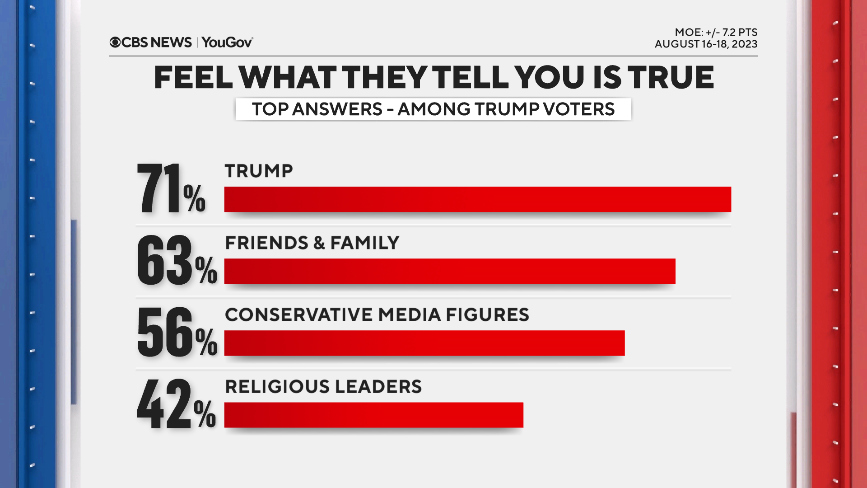
As is well documented, ambitious politicians can find appealing to such grievances (and identifying specific targets for those grievances) a good way to build a group of supporters. It doesn’t matter if the politician is cynically using the fact of grievance or actually himself shares that sense. Either way, once in power only a punitive approach to the designated unworthies will satisfy his followers and allow him to retain their support. Grievance politics leads to evil in Gaita’s sense—to treating other human beings in ways that one would never treat oneself. All in the name of what is “deserved.”
This is why punishment is always queasy making. It has too deep an entanglement in hatred to not exceed (no matter what the effort to make the punishment “proportionate” to the crime) the attempts to place bounds upon it. (The legal guardrails I discussed in my first post on Gaita are an attempt to keep the reins on punishment.) Underneath that apparent rationalism of putting the rapist in prison is the physical abuse that prison entails. We have never extirpated corporeal punishment from our criminal justice system. That system, instead, gives license to hatred and violence at certain specific sites within it—even if those sites are usually hidden from view. The cell phone camera has made police violence on the streets more visible; what goes on in jails and prisons remains almost entirely out of sight.
In sum: hatred focuses on what has already happened, on the status that some people enjoy or the injury some people have done, and it justifies violence. It can even lend a kind of righteousness to violence, a sense of “righting” wrongs.
A very common idea these days is that violence is enabled by rendering another human being “other”—putting him in a different category by virtue of his race, his religion, his sexual orientation. What I am saying is that such “othering” does not (in my view) enable violence unless that other is deemed a reprobate, an offender against some moral code. Hatred goes hand in hand with moral condemnation. Not in every case, but more often than not—or such is my suspicion.
This is a way of saying that violence is so terrible, is such a strong taboo, that some notion of self-righteousness is need to lead someone to kill or to torture.
Hamas does seem motivated by hatred—and by a hatred so pure in its desire to inflict injury on the hated ones that all consequences be damned. Their attack looks to me like the kind of murder/suicide we get in some of the mass shootings in the US, and even more frequently in domestic violence cases. There is, it seems to me, no notion that violence could be a solution in Hamas’ case (unlike the delusional notion that violence could actually accomplish something, a notion the US indulged to its and others’ cost both in Vietnam and Iraq). Hamas is just striking out in fury because it has no better ideas about how to improve things—and has decided instead to just destroy things and take as many of the “enemy” with them as they proceed to doom.
Is that evil? Certainly inflicting pain just for the sake of inflicting pain, killing others just for the sake (pleasure?) of killing them, would seem to fit the bill as at one of the forms evil takes. (Here, as elsewhere, human ingenuity and perversity leads to diversity. It would be a mistake to believe evil does not come in myriad forms.)
To pivot to fear. If hatred is retrospective, fear is anticipatory. You can’t fear something that has already happened. You can only fear what is still coming down the pike. I can fear the consequences (still to come) of what I did, but it makes no sense to say that I now fear what I did yesterday. Fear of the other can certainly be used to justify violence—the “preemptive strike” doctrine that the George W. Bush administration promulgated.
Fear can often go hand in hand with a politics of grievance. That undeserving group is also a threat because of what it will do in the future if left unchecked. More generally, a politics of fear can be used to declare certain groups in a society outside the bounds of inclusion. “They” are not to be tolerated, or given a voice in decision-making, or (most dramatically) allowed to assume power because they will destroy the society if given the opportunity. So fear, like hatred, can be a great “justifier.” It can offer a reason for violence—in order to preempt the harm (the injury) “those people” will do if given the chance.
And, of course, hatred/grievance and fear can co-exist–often in ways that reinforce one another.
I don’t think we can reach any easy conclusions about whether a politics of grievance and/or of fear is more characteristic of what we call the “right” as contrasted to the “left.” Much of that would depend on how willing proponents of either wing are to act violently against those they hate or fear. I do think it true that politicians of the right over the past 100 years have been more likely to try to ride the wave of grievance than politicians of the left—and much less reluctant to use violence. But why FDR’s outright demonization of “economic royalists” has mostly disappeared from the rhetoric of left-leaning politicians is a mystery (one that conspiracy theories about leftist politicians having been “bought out” by Wall Street and corporate money claims to explain.)
In sum, what interests me is how people permit themselves to be violent, to treat other human beings as much less than precious (to use Gaita’s understanding of “evil.”) Hatred and fear, which gravitate toward seeing others as either morally condemnable or as a threat, play a huge role in such justifications of violence.
 McGowanBlog